Case Study
Holding the Image in a Visual Art Exhibition
Three Da-Lite screens, a triptych of motion-captured performance, and a projection surface built to tour
Lisa Jamhoury describes loss·y as “a memorial to the physical body in the age of the digital body.” The title borrows from image compression, the process by which formats like JPEG shed data deemed unnecessary and extends the metaphor to the human, every avatar, feed, and captured motion sheds dimensionality. Something is always lost in the translation from body to data.
The installation, which premiered at SXSW 2026 in the festival’s XR Experience Competition, is a walk-through motion-captured performance, large-scale rear projection, 3D-printed sculpture, and spatial audio that shifts as visitors move through the room. It is deliberately slow. Visitors routinely spent ten minutes or more inside it, then stayed to talk. The work required a projection system that could hold its scale and image quality across that depth of experience.
For loss·y to work, every element of the physical installation had to serve the experience and then step aside. The projection surface had to be exactly right. Large enough to command the room, reliable enough to hold up across the exhibition, and visually clean enough to hold the work itself at full fidelity. That role fell to Legrand | AV’s Da-Lite.
What the Work Required of the Screen
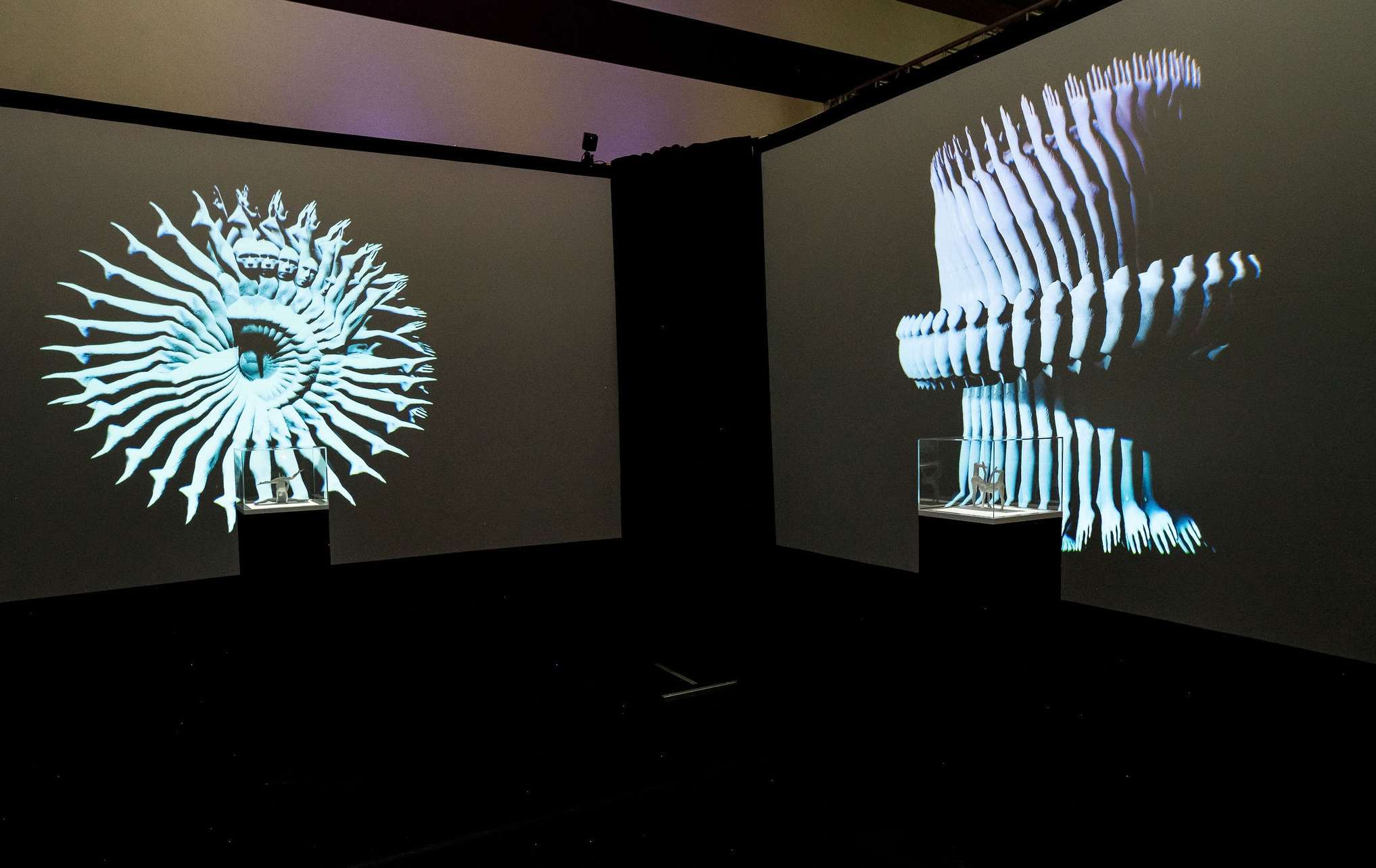
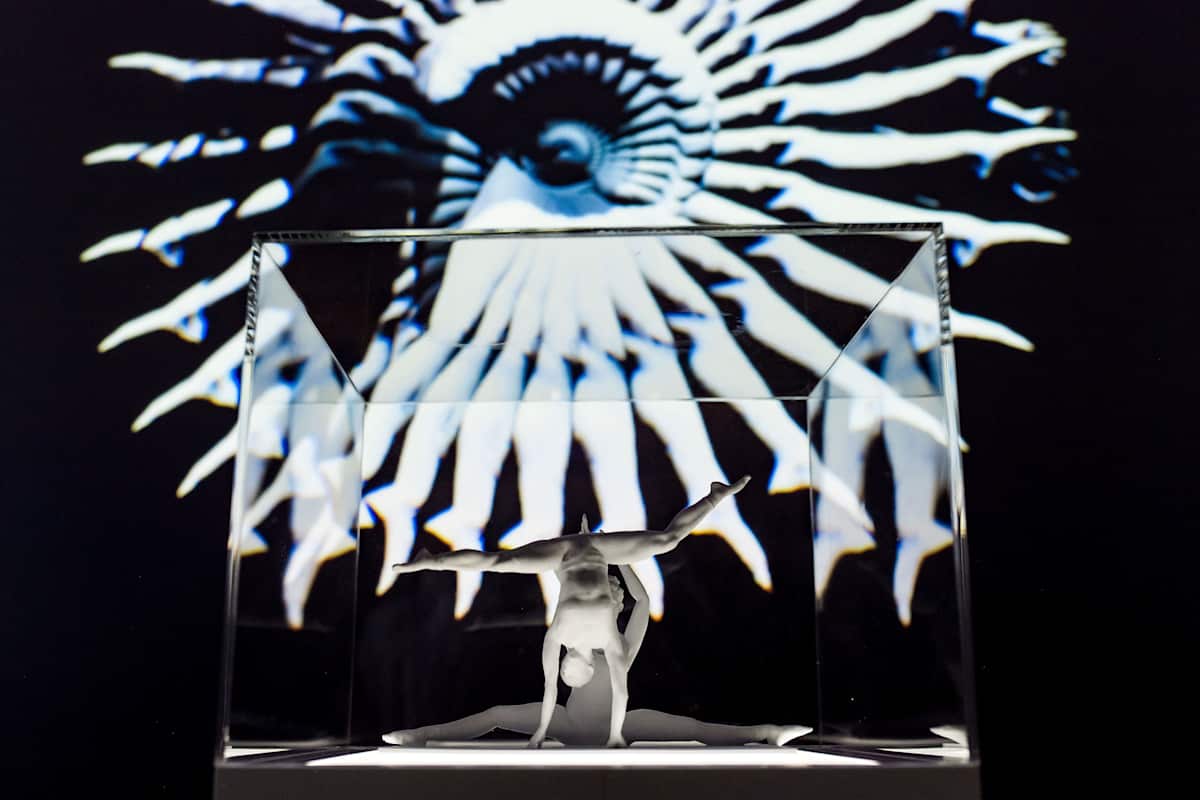
loss·y was conceived as a three-sided environment with three independent projection planes, each presenting a suspended moment from the motion-captured duet as a large-format animated sculpture. In front of each wall, a matching 3D-printed sculptural form sat on a plinth. The visitor stood between the projected image and its physical counterpart, the screen’s surface holding the boundary between digital and real.
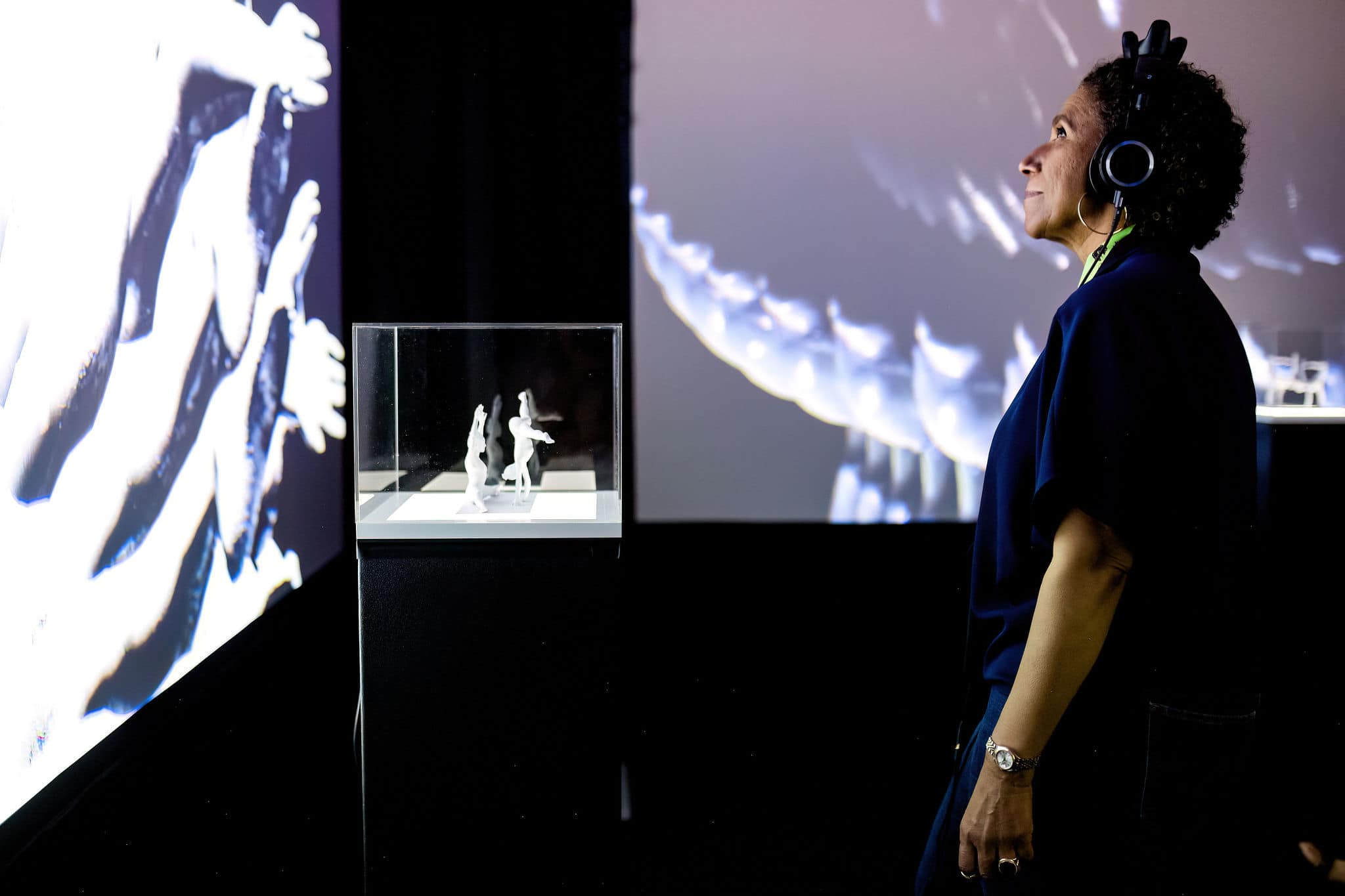
The installation used rear, ultra-short-throw projection, a choice driven by the physics of the experience. Each visitor wears a motion-tracked headset that navigates them through 24 discrete audio stems, some of which are anchored within roughly 12 inches of the screen surface. Visitors have to be able to walk right up to the image without interrupting it. Front projection was not an option. At SXSW, with a two-day install in a hotel ballroom and no rigging capability, ceiling-mounted short-throw was not an option either. Rear projection with an ultra-short throw behind the screen was the only configuration that preserved both the intimate viewing distance the work required, and the floor space visitors needed to move through it.
Each Da-Lite Fast-Fold® Deluxe Screen measured 83 x 144 inches, a 7-foot-tall image surface, specified three times over to create the distinct environment. Surface uniformity at that scale is non-negotiable: hotspots, wrinkles, or inconsistency become immediately visible in the dark, controlled-light conditions immersive installations require. The system was specified with Heavy Duty Legs and black skirt borders (model 36734HD) to frame each projection plane cleanly, eliminating edge bleed and keeping the screen infrastructure from competing with the work.
“At seven feet tall, any imperfection in the surface shows,” said Wendy Cox, Director of Product Management, Da-Lite. “Hotspots, ripples, frame sag, anything. The Fast-Fold Deluxe is engineered for that scale. The artist gets uniform tension and a clean border, and the work reads the way it was intended.”

Built to Tour
SXSW was the premiere, not the endpoint. Every component in the installation was evaluated against the same question: can it fly, survive repeated setup and breakdown, and still look gallery-quality on arrival? Jamhoury has specified nine-pound 4K projectors sized to check as standard luggage, and Pelican cases built around airline width limits with one inch of foam on each side. The screens had to meet the same bar.
The Da-Lite Fast-Fold Deluxe is designed for exactly this kind of deployment. The folding aluminum frame sets up without tools and locks into position with consistent tension across the projection surface. Heavy Duty Legs provide the stability required for a freestanding screen in a high-traffic environment where visitors are actively moving around and between the sculptural elements.
Running three screens in a single enclosed installation, each needing to perform identically, places specific demands on setup consistency and raises the bar further when the installation is rebuilt from travel cases at every new venue. With the Fast-Fold Deluxe, each of the three units is assembled to the same frame geometry and surface tension in every deployment, ensuring that the three projection planes presented a visually coherent environment whether in Austin or anywhere the tour lands. For an artist whose practice is built on the precision of human movement, that consistency was not optional. It was the technical requirement that made the conceptual architecture of the work possible.
“There’s so much technology running behind this piece, motion capture, game engines, spatial audio, wearable tracking, and none of it should be what a visitor notices,” said Jamhoury. “The screens had to do the same thing. Hold the image, be beautiful, and then get out of the way of the work.”
Bringing the Work to Life on the Floor
loss·y premiered at SXSW 2026 in the XR Experience Competition, co-produced by Lisa Jamhoury Studio and Onassis ONX, and presented as part of Future Art and Culture produced by British Underground and Arts Council England, with support from the British Council, EY Intelligent Realities Lab, and the Royal Shakespeare Company.
Across the exhibition, visitors moved through a room where three large-format rear-projection screens held the animated sculptural forms that anchored each vignette. The spatial audio system, built on Vive tracking technology by Clémence Debaig of Unwired Dance Theatre, shifted as visitors moved through the room, the experience physically mixed by every person who walked through it. Throughout the run, the Da-Lite screens held consistent surface quality, stable framing, and clean image borders.
The effect did not go unnoticed by the industry peers walking the floor. Other producers who saw the installation assumed the screens had been provided by SXSW’s own production operation, because they did not look like what a pop-up install normally looks like. They looked like a permanent gallery spec. That is the kind of canvas a serious work deserves. Museum-grade surface quality, in a room built in two days. loss·y is expected to continue touring, with additional European venues under consideration. Wherever the installation travels, the projection specification travels with it.
“I first saw Da-Lite screens at Onassis ONX and the surface quality stayed with me,” added Jamhoury. “At SXSW, the surface gave the projection a sense of stability and permanence; there was none of the visual chatter you might expect from a fast-fold. That was exactly what the work needed. loss·y is about what we lose when we compress ourselves into data. The projection had to hold the scale of that question without adding noise of its own.”