


Higher Ed Blog
Upgrading Campus Spaces with AV Furniture and Acoustics
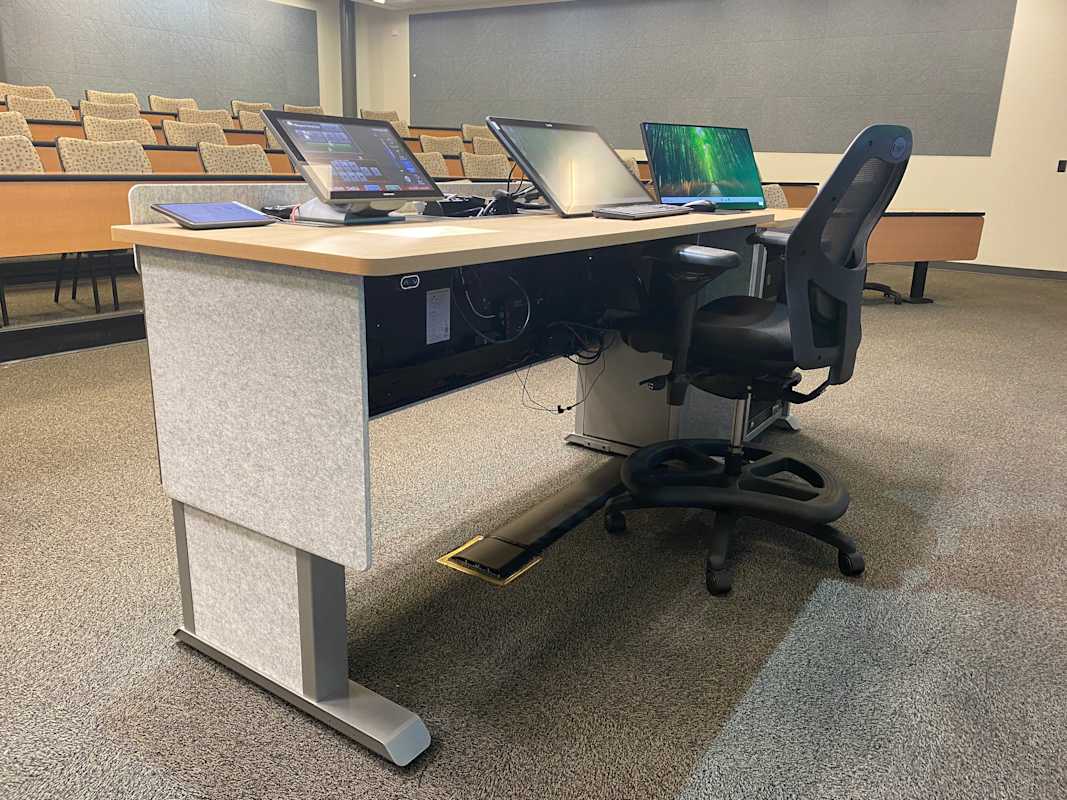
Poor classroom acoustics are a measurable barrier to learning. The good news is the problem is fixable, usually without demolition, without displacing occupants, and without a capital construction budget.
The Evidence is Harder to Ignore Than the Echo
The research is consistent across institutions and disciplines. Poor classroom acoustics cost you:
- Up to 30-40 percent reduction in speech comprehension
- Measurable declines in critical thinking and retention under noisy conditions
- 80 percent of professors reporting vocal strain from fighting background noise
The classroom measurements make this concrete. Many university spaces run between 55 and 65 dBA during the instructional day. At 60 dBA, speech comprehension falls to roughly 68 percent. At 65 dBA, it drops to around 60 percent, meaning students may be missing up to a third to a half of what’s being said. Most institutions have no idea this is happening.
The students who bear the heaviest cost are those who already face additional challenges including international and second-language learners, students with learning differences, anyone for whom listening already takes more effort. Acoustic quality is, at its core, an equity issue.
What "Fixable" Really Means
The standards give you concrete targets. ANSI guidelines recommend background noise not exceed 35 dBA. ANSI/ASA S12.60 calls for an RT60 - the time it takes sound to decay by 60 dB after a source stops - between 0.4 and 0.6 seconds. In untreated lecture halls, RT60 frequently exceeds 1.0 second. In one-third of measured classrooms, it exceeded 0.9 seconds at multiple frequencies, nearly double the recommended maximum.
Hitting those targets doesn’t require structural work. Hard parallel surfaces, open layouts, and undersized HVAC systems are the usual culprits, and all of them respond to surface-level treatment. The strategic use of ceiling tiles, wall panels, and suspended baffles can bring RT60 and noise levels into range without touching the building’s structure. Research shows properly treated classrooms deliver 25-30 percent gains in speech comprehension and 5-10 percent improvements in academic performance.
A Layered Strategy, Applied to the Right Surfaces
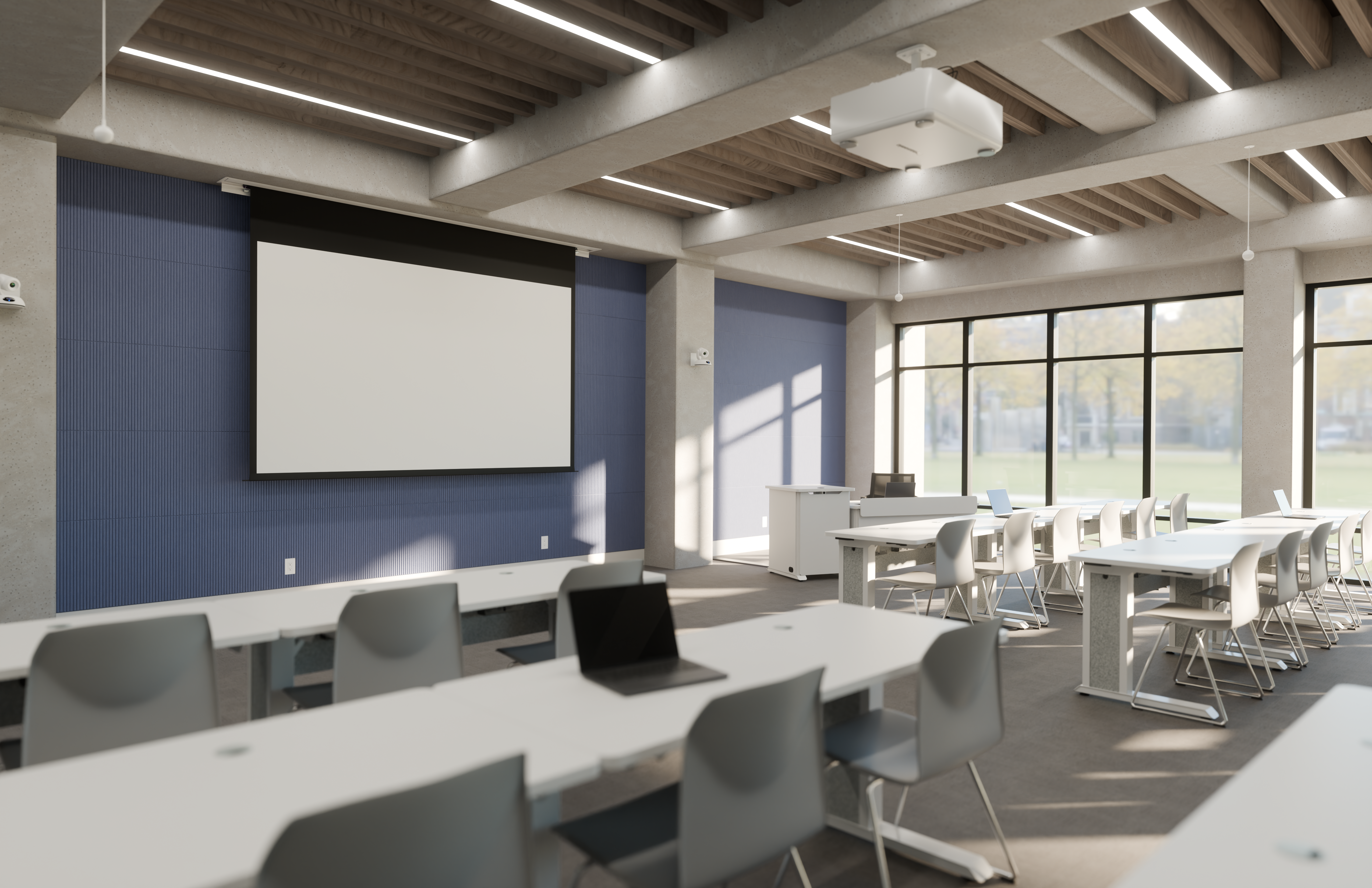
Effective treatment works ceiling, wall, and furnishing surfaces together, each layer addressing a different acoustic mechanism:
- Ceiling panels and tiles reduce reverberation time, the primary driver of speech blur in classrooms and lecture halls.
- Wall absorption panels control lateral reflections, especially valuable in narrower classrooms and study spaces.
- Suspended baffles and clouds address overhead reflections in tall or architecturally complex spaces where ceiling treatment isn’t viable.
- Sound-absorbing furnishings provide passive treatment at the point of use, with no installation required.
The combined effect is a measurable improvement in the Speech Transmission Index (STI) and a meaningful reduction in the listening fatigue that accumulates over a 50-minute lecture in a poorly treated room.
What Treatment Looks Like in Practice
Middle Atlantic, a brand within Legrand │ AV, offers an acoustic portfolio built around this layered approach. All products share a PET felt material foundation, up to 50 percent recycled content, DECLARE Certified and LBC Red List Free, so treatments across a space maintain a cohesive look while supporting sustainability commitments. Performance is backed by third-party accredited testing, and an RT60 calculator is available to help quantify the improvement before specifying.
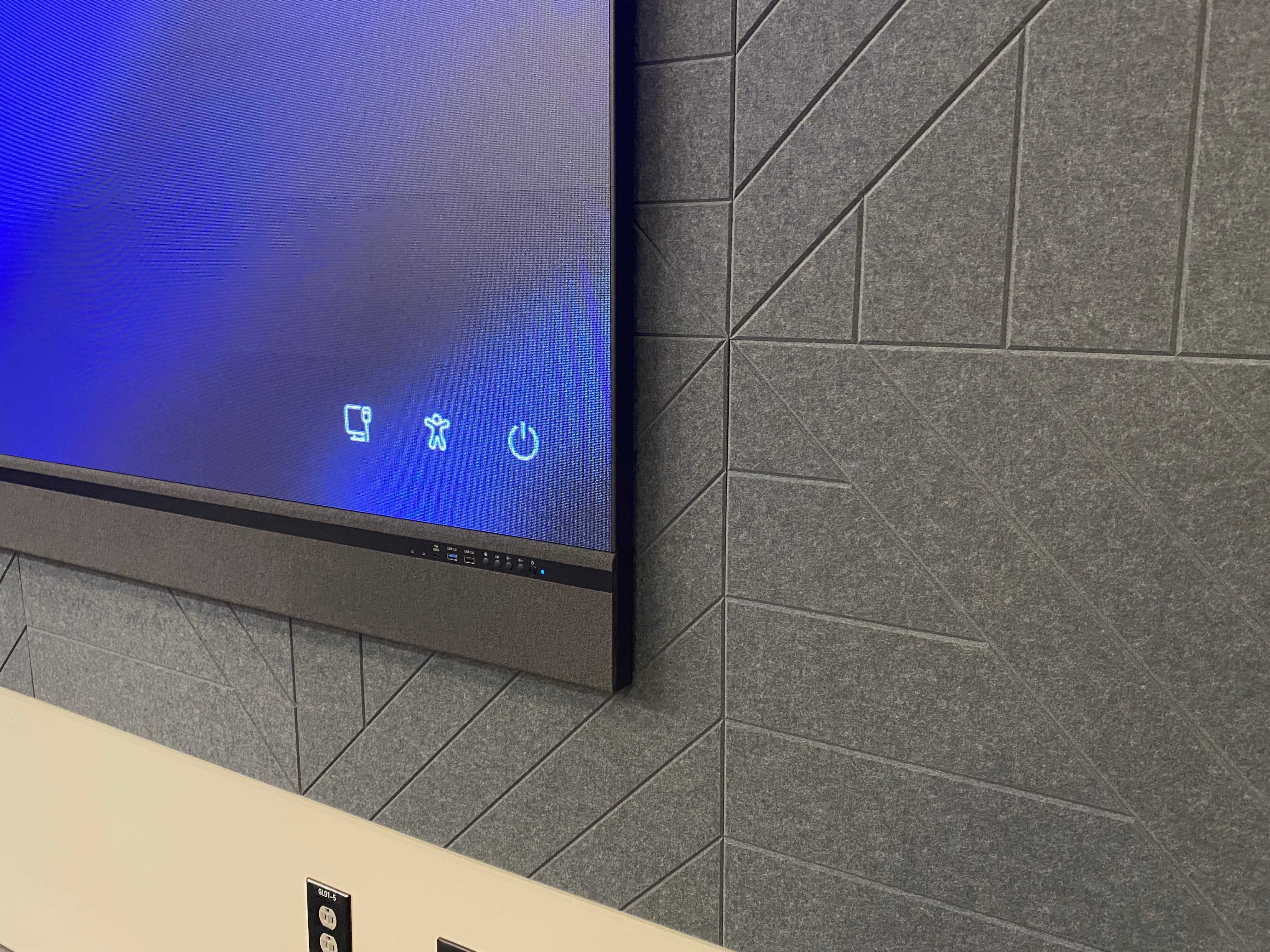
The TruTile™ Acoustic Wall Tile handles wall treatment: 2x2-foot PET felt tiles, 9mm thick, available in seven designs, four textures, and three organic shapes across more than 20 colors. They mount with adhesive strips, nails, or glue, ship flat up to 12 per box, and carry an NRC of 0.30. For the ceiling, the Nivo™ Acoustic Ceiling Tile drops into any standard 2x2 grid with NRC ratings of 0.9-1.3. Where aesthetics matter as much as performance, the Ori® Acoustic Ceiling Tile brings an origami-inspired design with nine angled surfaces, 10 design variations, and an NRC of 1.1, ships pre-assembled to reduce installation time. For spaces without a grid ceiling, TruBlade baffles and the AirCore® Seem systems suspend from the structure to deliver NRC ratings of 0.70 and above across open atriums, commons, and exposed architectural spaces.
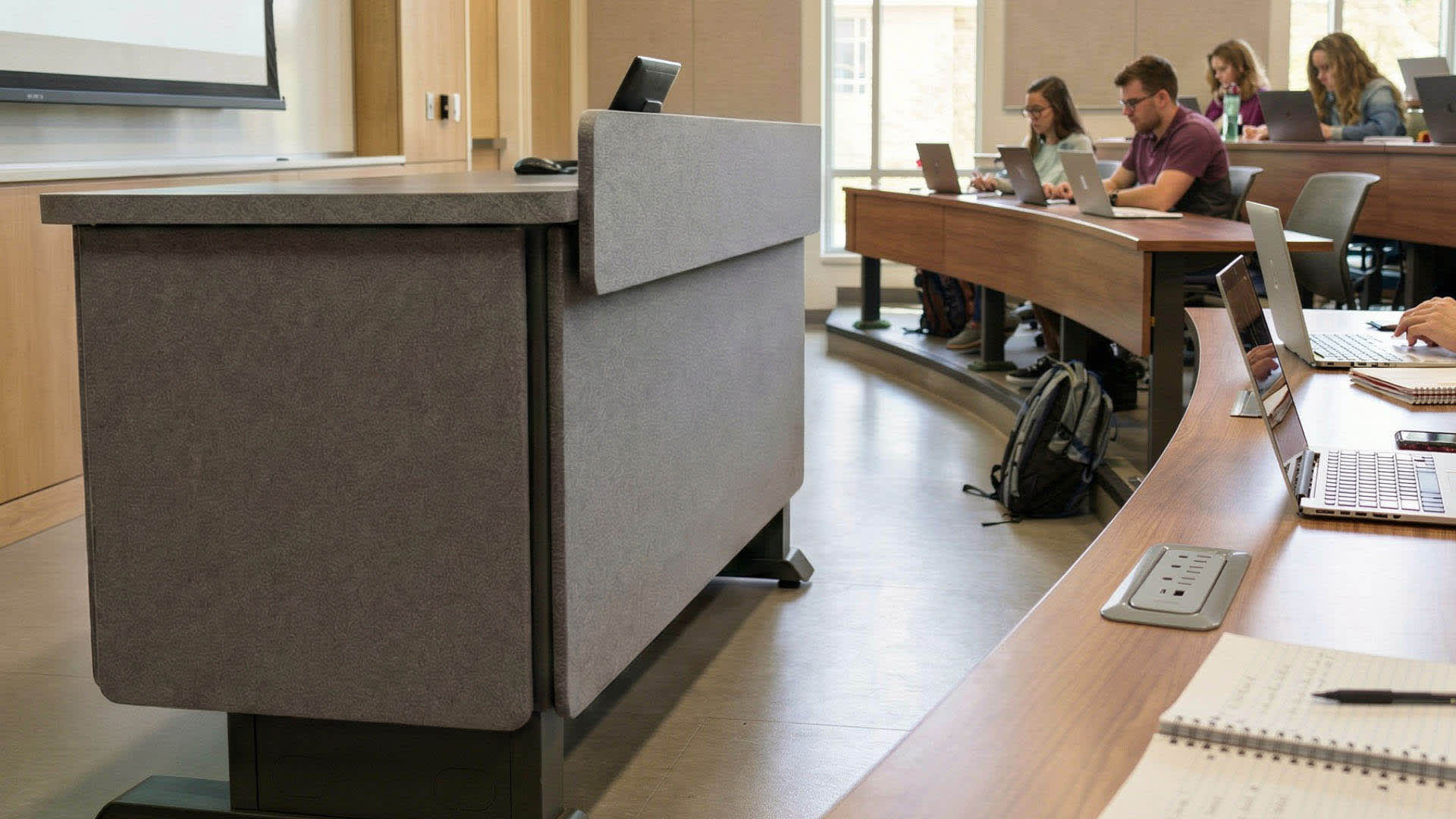
Furniture That Pulls It Together
Where to Start
Start with a measurement. Understanding your current RT60 and background noise levels gives you a baseline that justifies the investment and guides which surfaces to prioritize first. Legrand | AV’s higher education team can help with RT60 calculations, and your regional account manager can translate those numbers into a treatment plan for your specific spaces. Sample kits are available so your interiors team can evaluate materials in person, and a dedicated design center supports custom configurations for spaces with unusual geometry or branding requirements.
It doesn't have to happen all at once. A standard classroom with a grid ceiling is often the easiest place to start, and the most persuasive case study for expanding the program. When students and faculty can hear the difference in a single room, the case for the next one makes itself.
Ready to assess your spaces? Contact your regional Legrand | AV higher education account manager to request an RT60 consultation, or explore the TruTile™, Nivo™, Ori®, and Forum™ Collaboration Suite product pages to begin specifying your solution.
