Everything You Ever Wanted to Know About Cable Jackets
Cable Jacket Abbreviations
We know cables at C2G. As in, we geek out on the subject regularly, and our experts love sharing their knowledge with anyone who will listen. For anyone who has ever wondered what all the different cable jacket ratings mean, read on – this article is for you.
PVC -- Polyvinyl chloride (vinyl), a general-purpose plastic jacket material used for cables. Low cost, flexible, and widely used as a cable jacket for many applications — computers, communications, low-voltage wiring, etc. In the cable world, "PVC" is often used to denote a cable that is not suitable for use in plenum airspace. PVC can be dangerous in a fire situation, releasing heavy smoke and hydrogen chloride gas, which can irritate humans and be corrosive to electronic devices. PVC cables often have a CM, CMG, or CMR rating as defined by the National Electrical Code (NEC).
CM/CMG -- Communications cable for general purpose use. It is intended for general use within buildings per the NEC Article 800.53(E)(1). These cables do not spread the flame to the top of a tray in the Vertical-Tray Flame Test described in the UL 1865 standard. As a general rule, CM and CMG cables are suitable for installation in cable trays and other non-plenum/non-riser areas.
CMR (Riser) -- The cable is suitable for use in a riser application. In commercial buildings, a riser is a space used by vertical telecommunications infrastructure, connecting from one floor to another. CMR indicates cable intended for use within buildings in vertical shafts following Section 800.53(B) of the NEC. The test used for CMR cables is defined in the UL 1666 standard, which limits flame propagation height.
CMP (Plenum) -- "Plenum" cables are purposefully built with a jacket made of materials that give off low amounts of smoke and which retard the spread of flames. The word "plenum" refers to an airspace used for air circulation by an HVAC system, such as a drop ceiling or a raised floor. One popular jacket material is FEP (fluorinated ethylene propylene). Even though "plenum cables" are usually identified as separate from "PVC cables," PVC compounds are often used to construct plenum jacket material. CMP is a classification of cables defined by the NEC for cables designed to be installed into a building's plenum airspaces. The most popular test for CMP cables is determined by the NFPA 262 standard, which outlines criteria for low-smoke and flame-travel performance.
LSZH -- Low Smoke Zero Halogen. These cables are built with a jacket material free from halogenic materials (such as chlorine and fluorine) because of the toxic nature of these chemicals when burned. However, LSZH cables have yet to be specified by the NEC for use in installations in the US, and they may have questionable flammability characteristics. LSZH cables are used primarily in Europe.
OFNR -- Optical Fiber Non-conductive Riser —fiber optic cables without any conductive metal structures (such as strength members or vapor barriers) approved for use in a riser application. Most fiber optic cables are constructed of materials that do not conduct electricity (glass, plastic, Kevlar, etc.).
OFNP -- Optical Fiber Non-conductive Plenum —similar to the fiber optic cable described above, but with a jacket suitable for plenum airspaces.
CL2/CL3 -- Cable designed for a Class 2 or Class 3 circuit, as defined by the NEC Article 725. CL2/CL3 cables are typically used for low-voltage applications other than power or communications, such as speakers, audio/video signals, or computer data. The specification for CL2/CL3 cables is designed to protect from both fire and electric shock. CL2 circuits are limited to up to 100VA of power at 30V and up to 0.5VA between 30V and 150V. CL3 circuits can provide up to 100VA of power up to 150V. For most applications, CL3 cables can be installed in CL2 circuits, but CL2 cables cannot be used for CL3 circuits.
SVT -- Service Vacuum Thermoplastic; this is a definition for jackets used primarily on power cords for vacuum cleaners, fans, and portable lights. SVT is a flexible jacket designed for indoor use only. SVT is outlined in NEC Article 400.
SJT -- Service Junior Thermoplastic. Another jacket is used for power cords designed for demanding usage indoors. This is commonly found on many universal power cords for computers and other electronic devices. Also described in NEC Article 400.
NEC -- Set of rules intended to provide requirements for the safe installation of electrical wiring & equipment. The NEC was developed in 1897 to create a national standard for electrical products & practices. It is revised and amended every three years, most recently in 2005. Although the NEC is not the product of a governmental body, local governments often adopt its codes and standards to regulate safe electrical installation practices.
NFPA -- National Fire Protection Association, a national non-profit organization.
UL -- Underwriters Laboratories, an independent non-profit organization that tests and certifies products for safety.
This article is for informational purposes only and is subject to change without notice. Legrand | AV makes no guarantees, either expressed or implied, concerning the above information's accuracy, completeness, or reliability.
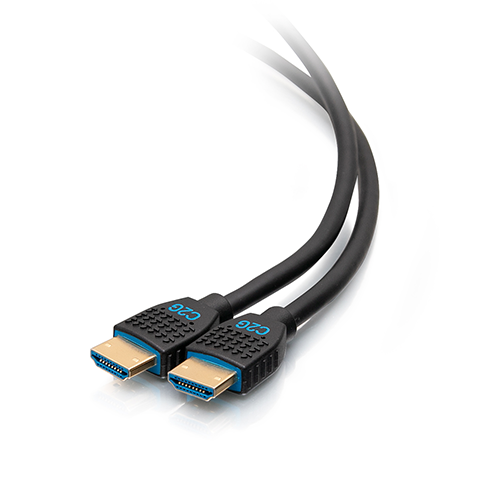
C2G Product Series
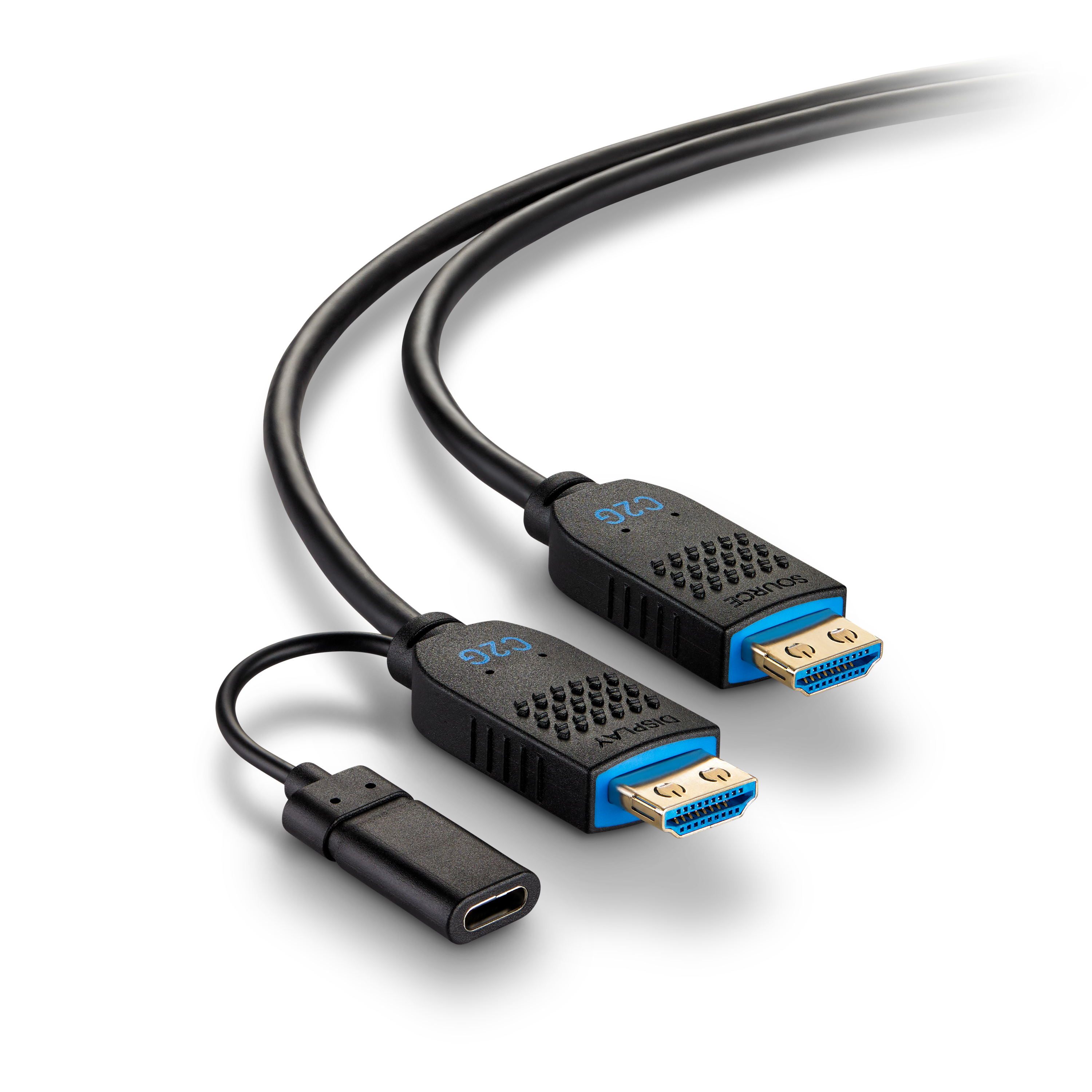
HDMI Active Optical Cables - Plenum Rated
Vaddio Product Series
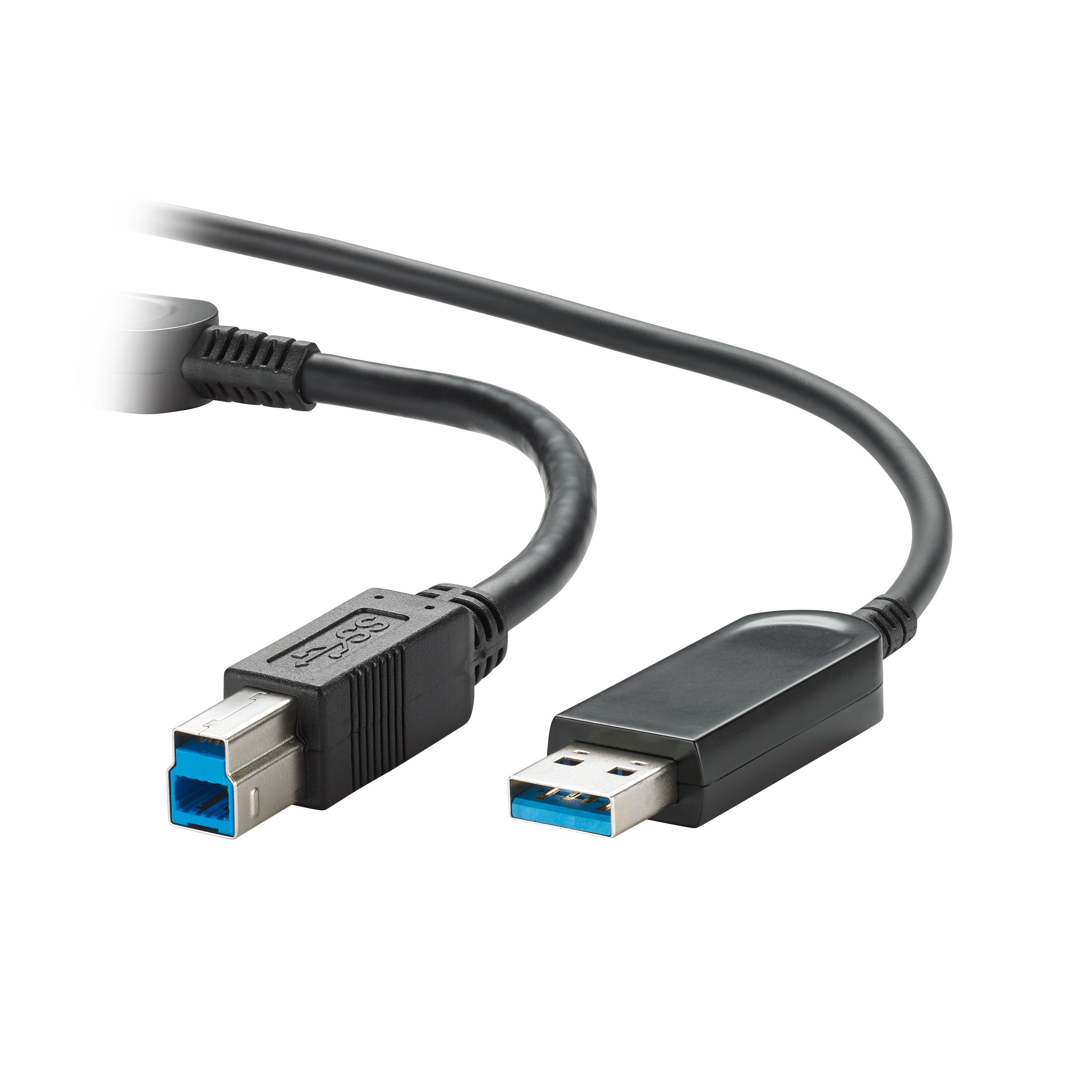
USB 3.2 Gen 2 USB-B to USB-A Active Optical Cables - Plenum Rated