Hardware Is Only Half the Story: What Complete AV Management Looks Like in 2026
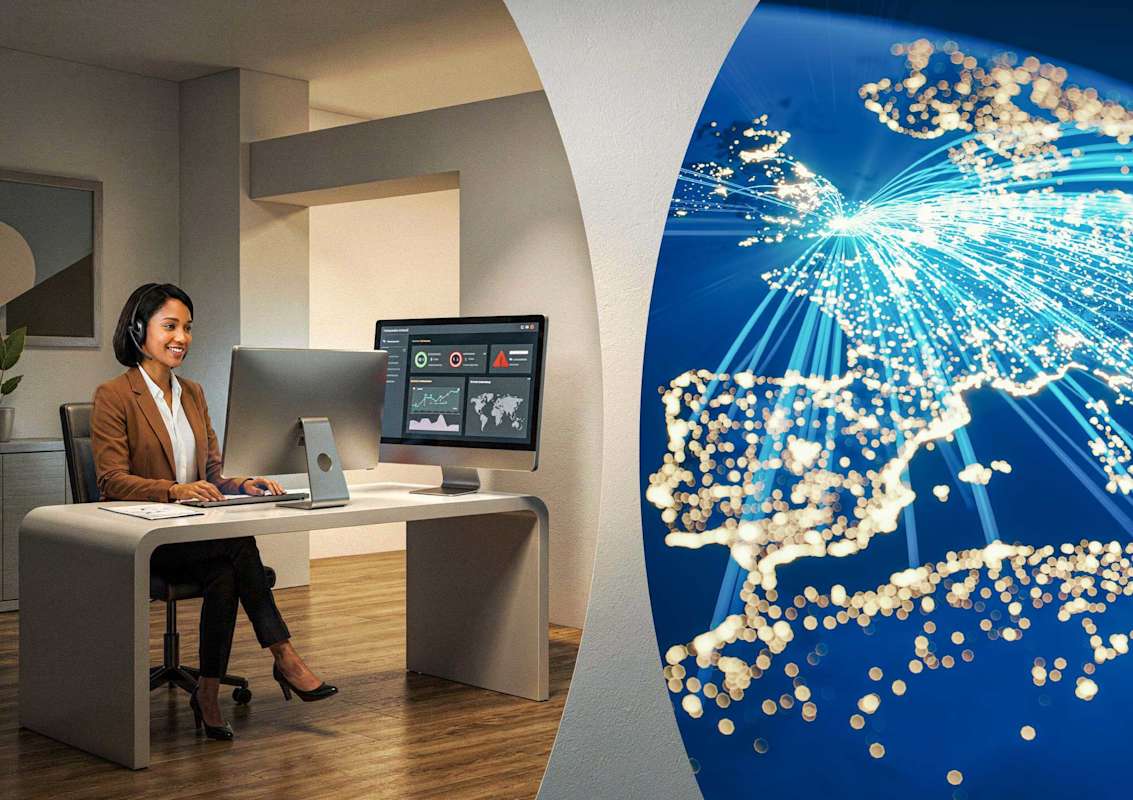
On Monday morning, across a corporate campus, a university, or a retail network, hundreds of AV devices come online: conference room displays, classroom projectors, digital signage walls. A few years ago, the AV team would have found out about a failure when someone called to complain. Today, they already know. In many cases, the issue was resolved before anyone walked into the room.
That shift is what this blog series is about. The hardware itself is better than ever, and the technology now sitting on top of it is opening opportunities that hardware alone never could: real-time monitoring, predictive alerts, remote control, and intelligent automation across every device a team manages. Remote monitoring and management (RMM) is how AV teams capture those opportunities at scale, and it’s why Legrand | AV is investing heavily in RMM.
Hardware Was Never the Whole Story
Legrand | AV has one of the broadest hardware portfolios in the commercial AV industry: Middle Atlantic racks, power, and technical furniture; Vaddio conferencing cameras; Chief mounting solutions; Luxul networking; Da-Lite projection screens, and more. Together, these category-leading brands cover virtually every component in a professional AV deployment. A portfolio of quality components isn’t the same as a managed system, and the distinction matters more with every passing year as commercial AV environments (corporate campuses, university lecture halls, retail signage networks, government facilities) are growing more complex, more connected, and more business critical. A working display in a flagship conference room is the difference between an IT ticket and a board presentation that runs on time. A projector that comes up reliably on a Monday morning is the difference between a disrupted class and the valuable learning experience of tuition well spent. Organizations have always understood the value of uptime. What’s changed is that they can now measure it precisely and choose solutions that protect it proactively.
The Shift from Managing Hardware to Managing Outcomes
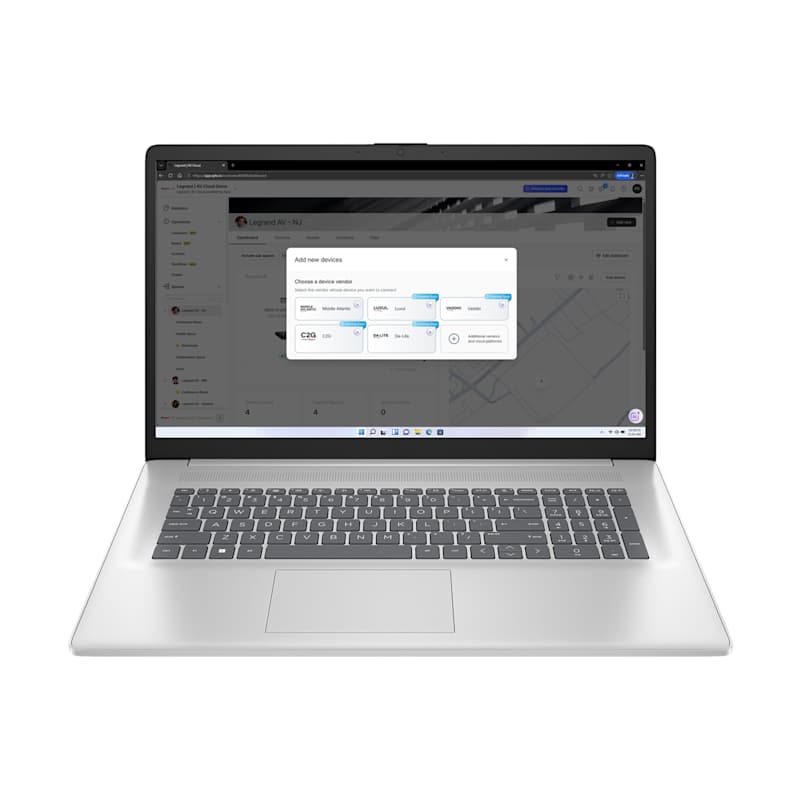
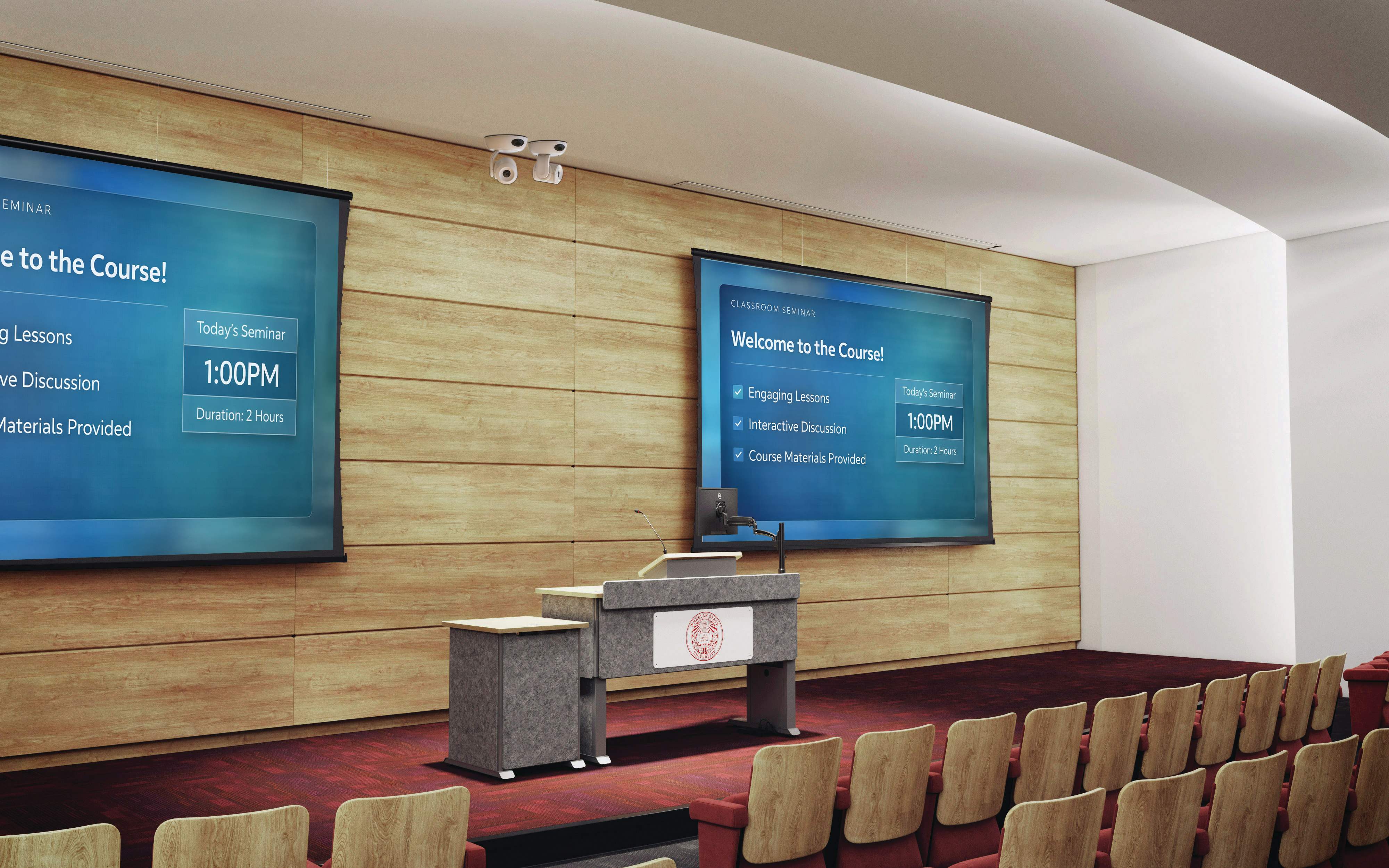
The question customers kept asking was how to manage all of it, at scale, from anywhere. That question is what RMM is built to answer, and it’s the principle now guiding every product Legrand | AV develops and every experience it offers. The Legrand | AV Unified Cloud Platform, powered by Xyte, is how that thinking shows up in the market today: a cloud-based management environment that turns Legrand | AV hardware into a connected, observable, controllable system. From a unified environment, AV managers and integrators can monitor device health in real time, receive predictive alerts before issues affect users, push configuration updates remotely, automate power schedules, and generate the usage data that turns maintenance into informed planning. A built-in intelligent assistant surfaces anomalies, suggests fixes, and guides technicians through workflows that used to require a senior engineer on site. The practical outcomes are straightforward. A technician gets an alert that a PDU in a remote conference room is drawing anomalous power before the meeting that’s scheduled there at 9 a.m. A campus AV team sets automated schedules to power down projectors during spring break, cutting energy costs across 200 classrooms without manual intervention. An integrator walks into a service call with full diagnostic history instead of starting from scratch. None of it requires being in the room; that’s the magic of RMM.
Open By Design
One of the most important conversations AV managers have with IT is about control. Who else can see this? What happens if we add a device from a different manufacturer? Are we locked into one vendor’s ecosystem? Legrand | AV built the Unified Cloud Platform to answer those questions directly. As a founding member of the OpenAV Cloud initiative, Legrand | AV has built the Unified Cloud Platform around open APIs and interoperability rather than walled gardens.
That openness starts upstream of the cloud itself. Across the portfolio, products are being designed with RMM, managed services, and downstream integrations in mind. Connectivity, observability, and remote control are built into the hardware from the start, not added later. The platform connects natively with Legrand | AV’s hardware portfolio, and it also works alongside enterprise control systems such as Crestron, Q-SYS Reflect, and third-party devices through cloud-to-cloud integrations and edge-connected device support.
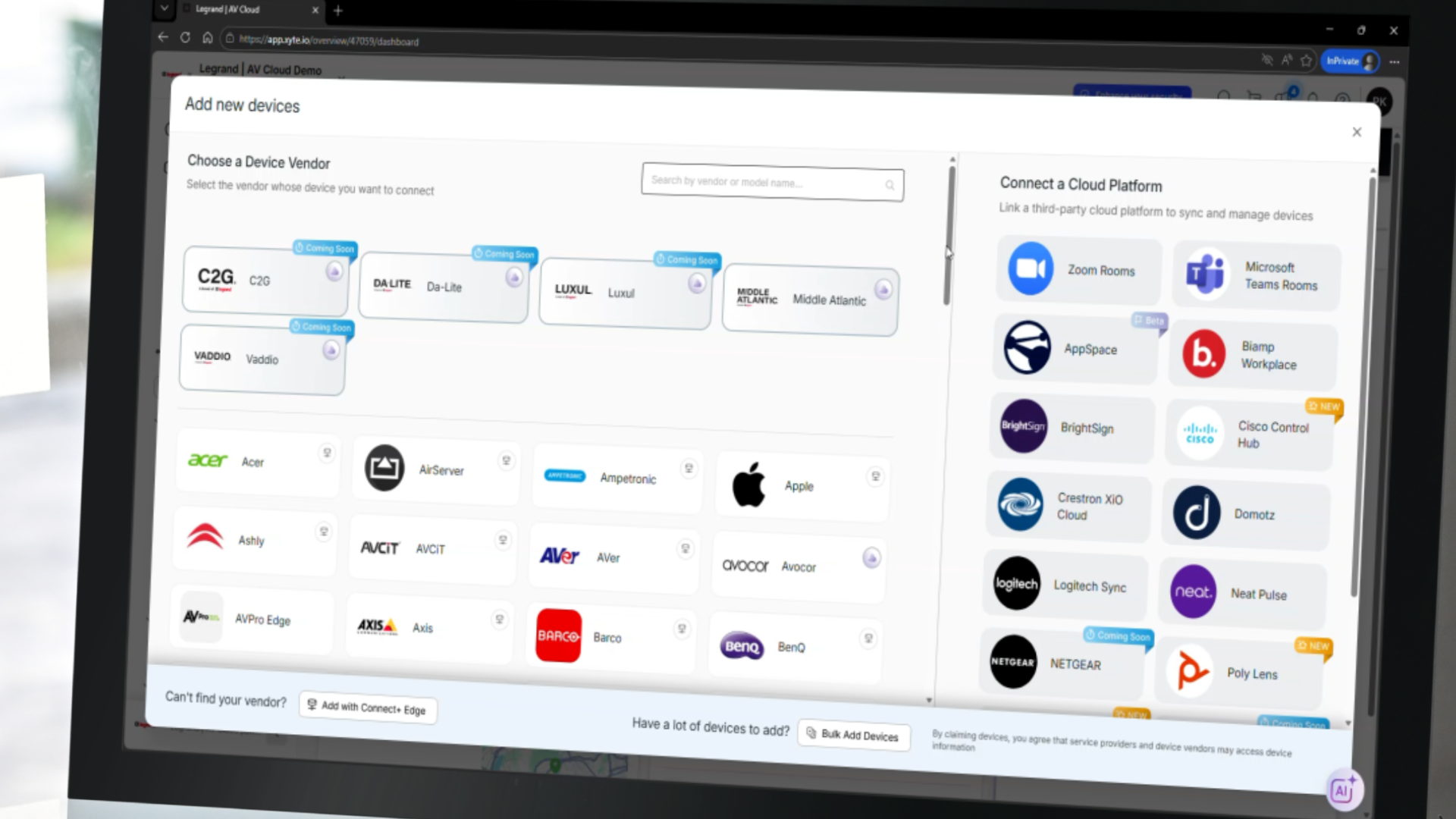
That matters because real-world AV environments are hybrid. A corporate campus might have a decade of legacy hardware from multiple manufacturers. A university might be standardizing on a new platform while managing rooms that won't be updated for years. The ability to bring all of that into a single management view, without forcing a full hardware replacement cycle, is the difference between a tool that works for the real world and one that only works for greenfield installations. The Legrand | AV approach starts from how customers actually deploy AV: across mixed environments, with partners and platforms they already trust. Strong connectivity between products, platforms, and partners is how we present a cohesive Legrand | AV solution and give AV and IT teams the workflows, tools, and capabilities they need to do their best work.
A New Way to Think About the AV Partner Relationship
The AV integrator role is evolving. Design, sell, and install will always be the foundation, and now RMM adds an ongoing layer on top: continuous visibility into installed systems, proactive maintenance, and a deeper relationship with the client between projects. When an integrator can remotely monitor the systems they’ve installed, provide proactive maintenance, and guarantee uptime SLAs to their clients, they’re delivering a managed service alongside the install: a recurring revenue relationship with built-in value that compounds over time. For integrators, that’s a fundamental business model upgrade, and Legrand | AV’s open platform is designed to support it. Because the Legrand | AV Unified Cloud Platform works with a wide range of hardware, integrators aren’t limited to managing only Legrand | AV installations. They can bring more of their installed base under management, increasing the value they deliver to clients and the revenue they generate per account with a robust managed services offering. For end users, the value is different but equally significant: an integrator who’s monitoring your systems proactively is a partner, not just a vendor. That relationship changes how AV is seen inside an organization: as a service the business can count on, not a system that occasionally needs attention.
What This Series Will Cover
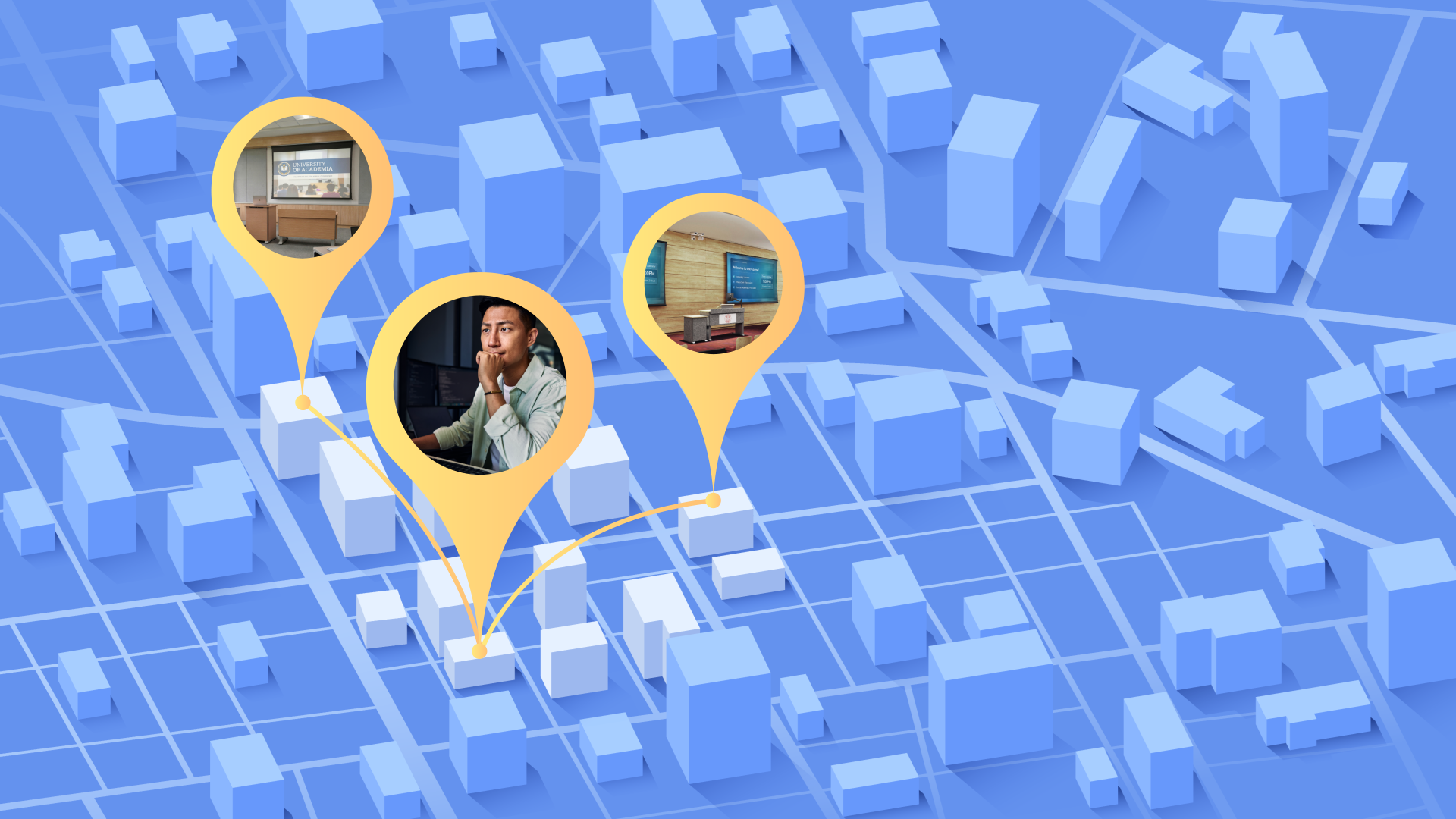
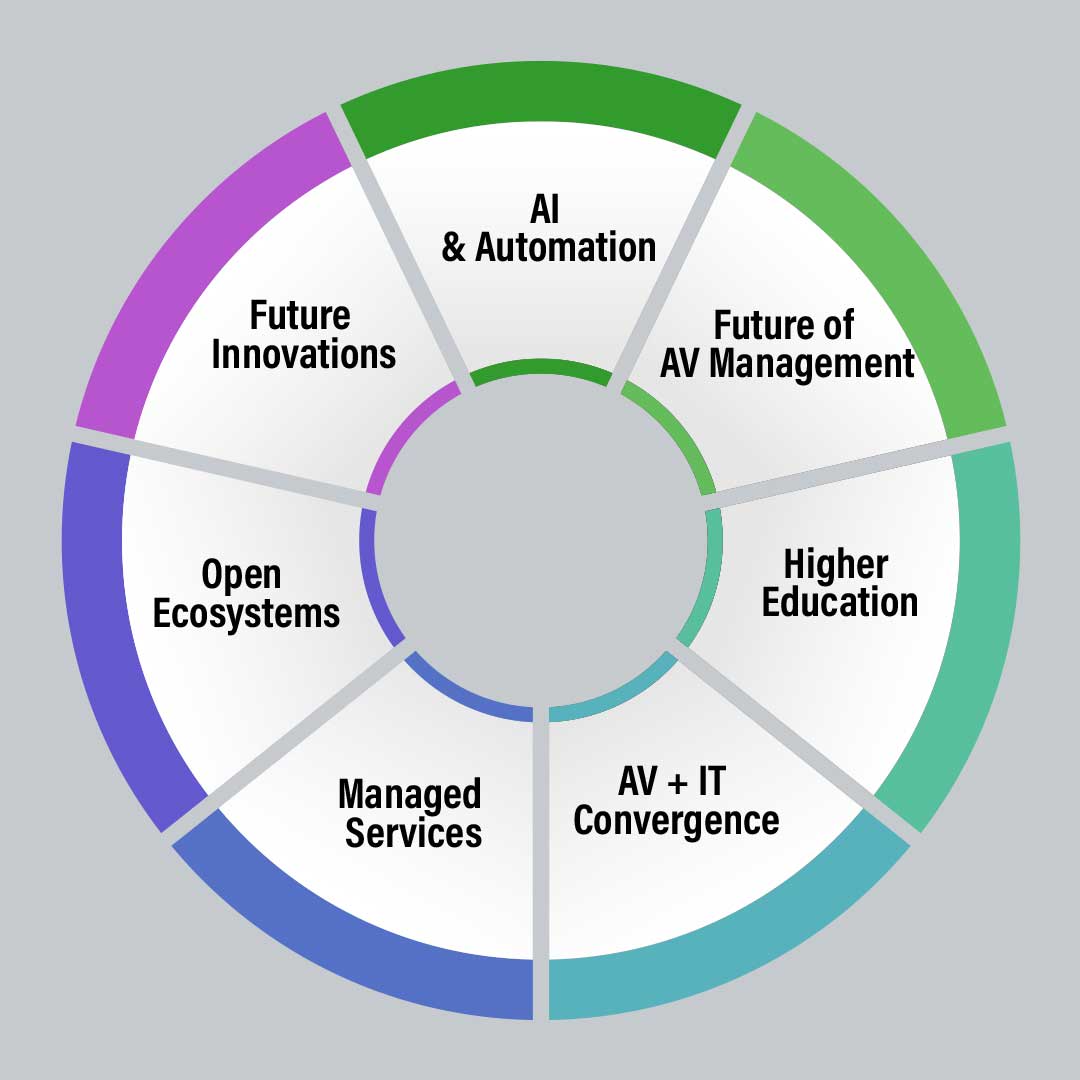
This post is the first in a seven-part series on the future of AV management. Over the coming months, we’ll go deeper on the specific use cases, technologies, and business outcomes that make RMM meaningful across different environments and audiences. We’ll look at what a down classroom actually costs a university and how campus AV teams are getting ahead of it. We’ll examine how AI-powered monitoring is shifting facilities teams from reactive break-fix to proactive oversight. We'll walk through how AV and IT teams are partnering on network-connected AV: what makes the approval process smooth, and what Legrand | AV has built to support that collaboration.
AV has moved beyond hardware. The organizations and integrators that understand that earliest will be the ones best positioned for what comes next. If you want to go deeper on any of the topics in this series, follow our resource hub. We’ll be adding content every month so stay tuned.
Legrand | AV is a founding member of the OpenAV Cloud initiative and a leading provider of cloud-managed AV infrastructure for commercial, education, and enterprise environments. The Legrand | AV Unified Cloud Platform is available today.
Account Sign Up
Create Your Free Account